Mushroom foraging trends are leading to an increase in accidental poisonings and deaths
12/08/2025 / By Lance D Johnson
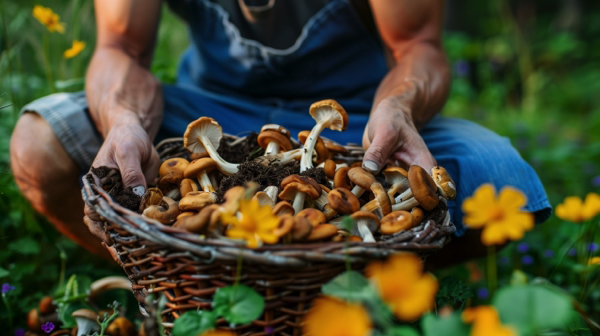
Imagine a quiet family meal, a foraged delicacy gracing the table, celebrated as a connection to nature and a triumph of self-sufficiency. Now imagine that same meal harboring a silent, slow-acting poison that methodically shuts down the liver and kidneys, offering a cruel reprieve before delivering a fatal blow. This is a grim reality for an increasing number of foragers as toxic mushrooms, particularly the infamous death cap, proliferate in urban and wild spaces.
While health officials issue cautious warnings, a critical question remains: Why is there not a more aggressive public campaign against these biological landmines, and what corporate or governmental complacency allows these killers to grow unchecked near our homes and parks? The recent poisoning outbreak in California, which claimed a life and threatened several others including children, is a tragic testament to a growing public health blind spot.
Key points:
- A deadly outbreak of amatoxin poisoning in California, linked to death cap mushrooms, has resulted in one adult death and multiple severe illnesses, with victims including children.
- Officials are warning against all wild mushroom foraging, as toxic species like the death cap and destroying angel are easily mistaken for edible varieties.
- Symptoms of poisoning can be delayed and may temporarily improve, creating a false sense of security before catastrophic liver failure sets in.
- The problem is global, with similar deadly incidents reported in Australia, highlighting a widespread danger exacerbated by wet weather and popular foraging trends.
- Children are at particular risk, with thousands of annual exposure cases in the U.S. alone, often from simply picking mushrooms while playing.
A deceptive killer hiding in plain sight
The death cap mushroom, or Amanita phalloides, is not a dramatic, brightly colored warning. It often presents as an innocuous, pale-green or yellowish-capped fungus that could easily be mistaken for a puffball or a straw mushroom. Its taste is reportedly not unpleasant, and cooking it does nothing to neutralize its potent cocktail of amatoxins. These toxins insidiously attack the body’s cells, halting protein synthesis and causing cellular death, primarily in the liver and kidneys. The sinister genius of the death cap lies in its delayed reaction. As California health officials noted, symptoms like vomiting, diarrhea, and cramps may appear 6 to 24 hours after ingestion, then seem to subside. This lulls the victim into believing the worst has passed. In reality, during this false recovery, the toxins are relentlessly destroying internal organs, leading to a terminal phase of liver and kidney failure that can result in coma and death weeks later.
Why warnings are not enough
The standard official advice is straightforward: Do not forage unless you are an expert. Yet, this advice clashes with a powerful cultural movement. Foraging has exploded in popularity, fueled by social media trends, a desire for organic food, and a growing distrust of industrial agriculture. Furthermore, as noted by Australian officials, immigrants may mistakenly identify death caps with similar-looking edible species from their home countries. The government’s tepid response—issuing press releases after people die—feels like a bureaucratic shrug. Where is the public service campaign? Where are the signs in parks known to harbor these killers, like the one implicated in the Monterey County poisonings?
This is not just a California problem. The Food Safety Information Council in Australia has issued identical warnings, noting deaths in Canberra and hospitalizations of children. The death cap is an invasive species there, often found near imported oak trees. Wet weather, a pattern seen in both California and Australia, acts as a catalyst for their growth. The problem is a hydra with many heads. Beyond the death cap and its relative the destroying angel, other deadly fungi pose significant risks. Many poisonous mushrooms have edible look-alikes, creating a botanical minefield for the untrained.
Here is a list of ten poisonous mushrooms, and their lookalikes, which are sometimes mistaken.
- Death Cap – Often mistaken for edible puffballs or Asian straw mushrooms.
- Destroying Angel – Looks similar to edible meadow mushrooms or young puffballs.
- False Morels – Can be confused with true morels; contain gyromitrin, which damages the liver and central nervous system.
- Jack-O’-Lantern – Mistaken for chanterelles; causes severe gastrointestinal distress.
- Green-Spored Lepiota – Resembles edible parasol mushrooms; highly toxic.
- Autumn Skullcap – Looks like edible honey mushrooms; contains the same deadly amatoxins as the death cap.
- Deadly Galerina – A small, brown mushroom often growing on wood that is easily overlooked but contains amatoxins.
- Ghost Mushroom – In Australia, commonly mistaken for oyster mushrooms but can cause severe illness.
- Yellow Stainer – Closely resembles a field mushroom and is the most commonly ingested poisonous mushroom in parts of Australia.
- Webcap (Cortinarius species) – Can be mistaken for other edible brown-capped mushrooms; causes kidney failure.
Taking personal responsibility in a poisoned world
The ultimate shield against this invisible threat is profound personal caution. It requires rejecting the tempting idea that a quick online search or a phone app can reliably identify a safe meal. True mycological expertise takes years to cultivate. For parents, this vigilance extends to their children’s play areas, as thousands of curious toddlers are exposed to unknown mushrooms annually. The solution is not to live in fear of nature, but to respect its power. Appreciate the beauty of fungi with your camera, not your frying pan. Source your mushrooms from transparent, reputable growers. If you suspect any exposure, do not wait for symptoms. Seek immediate medical help and, crucially, bring a sample of the mushroom for identification. Your life, and the lives of your loved ones, may depend on that single act of foresight. The forest floor holds many wonders, but it also holds secrets that can kill. Are you willing to bet your life on guessing them correctly?
Sources include:
Submit a correction >>
Tagged Under:
Amanita phalloides, Australian warning, California outbreak, child safety, death cap mushroom, food safety, foraging danger, garden danger, invasive species, liver failure, mushroom poisoning, natural toxins, organic hazards, parenting warning, poison control, Public Health, self-sufficiency risks, Silent Killer, toxic fungi, wild mushrooms
This article may contain statements that reflect the opinion of the author
RECENT NEWS & ARTICLES